
Plants
The right plant list starts with site conditions, not wishful thinking. Auxo Gardens groups plants by where they grow best and how they function in a garden, so you can match choices to light, moisture, space, and the look you want over time.
Explore ↗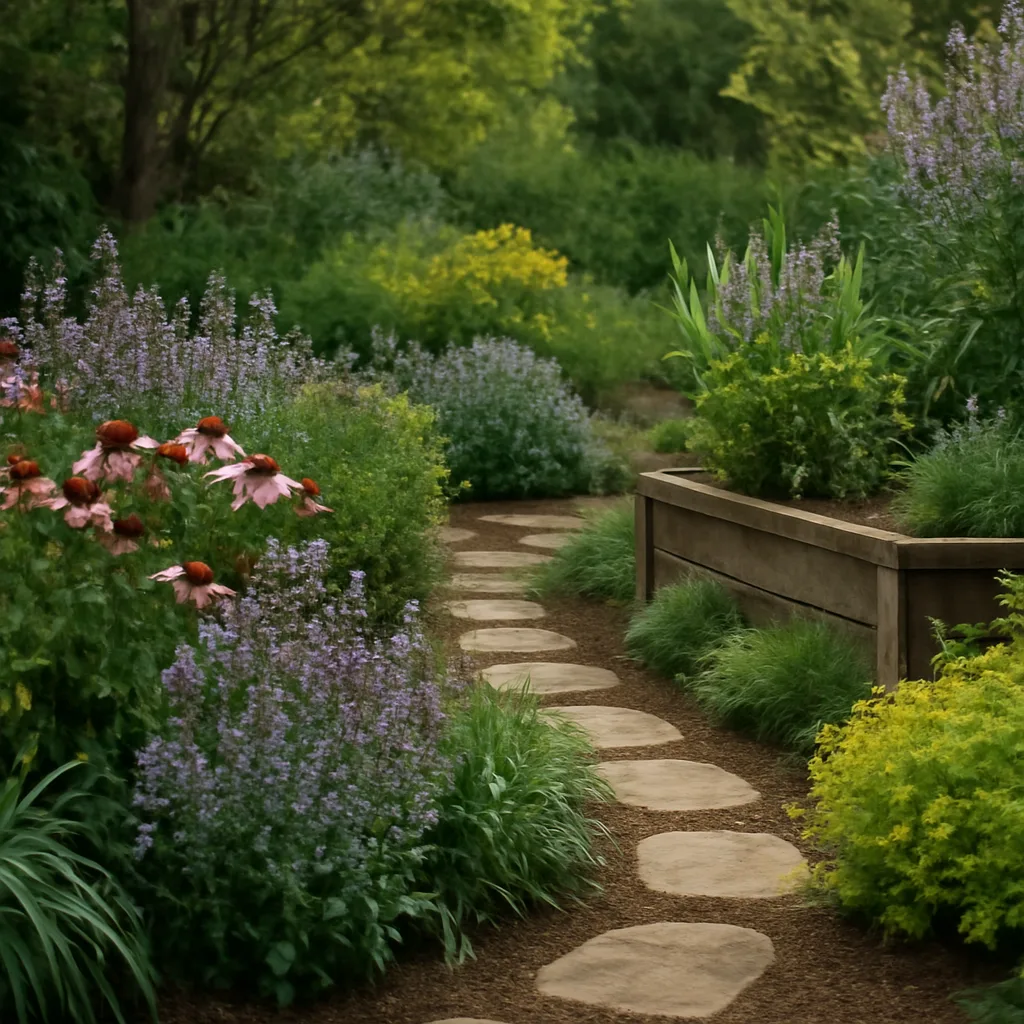
Start with the site, then narrow by purpose
Before choosing varieties, read the garden as a set of conditions. Note where sun lingers, where shade stays cool, how quickly water drains, and which areas dry out first. These basics help prevent the common mistake of placing plants where they can only survive, not settle in.
Once the site is clear, sort plants by purpose. Some fill space quickly, some structure a border, some soften hard edges, and some are chosen mainly for leaf texture, scent, or seasonal interest. A useful plant list balances all of these roles instead of relying on one type of plant everywhere.
- Full sun, part shade, deep shade, or shifting light through the day
- Dry, evenly moist, or moisture-retentive soil
- Groundcover, vertical accent, seasonal color, or long-term structure
Plants for sun and open exposure
Sun-loving plants usually need steady light and soil that does not stay waterlogged. They are useful in open borders, front gardens, and exposed corners where shade plants struggle. In brighter sites, look for sturdy stems, smaller or tougher leaves, and forms that can handle heat and reflected light.
When selecting for sunny areas, group plants with similar water needs so maintenance stays simple. Mixing drought-tolerant plants with thirstier ones often creates uneven growth. If the area is windy or hot, choose compact forms or plants with flexible stems that are less likely to scorch or flop.
- Best for open beds, courtyard edges, and reflective paving areas
- Often suited to free-draining soil and regular air movement
- Good choices tend to tolerate heat and stronger light without constant protection
Plants for shade, dappled light, and sheltered corners
Shadier areas reward plants that value cooler roots and filtered light. These spaces often support richer leaf color, softer textures, and layered planting. The key is to match plant density to available light so the area feels full without becoming stagnant or crowded.
In partial shade, mix plants with different leaf shapes to avoid a flat look. In deeper shade, texture matters more than flowers, since bloom display may be limited. Watch for moisture around tree roots and walls, where competition can be intense and soil can dry unevenly.
- Use layered textures: broad leaves, fine foliage, and upright accents
- Avoid overcrowding in low light, where air circulation is slower
- Choose plants that cope with root competition near trees and shrubs
Plants for moisture, drainage, and difficult spots
Not every area in a garden behaves the same after rain. Low spots may stay wet, while raised edges and sandy areas dry out fast. Choosing plants for moisture conditions is one of the simplest ways to reduce losses and improve long-term performance.
For damp ground, prioritize species that tolerate repeated wetness rather than trying to force drainage with surface fixes alone. For dry ground, use plants that establish deep roots and pair them with a mulch strategy that slows evaporation. Matching plant to moisture is usually more effective than trying to change the entire site.
- Wet ground: choose plants that tolerate slower drainage and seasonal saturation
- Dry ground: choose drought-tolerant plants with deep or spreading roots
- Borderline areas: group plants by similar watering needs to simplify care
Build contrast with texture, form, and repeat planting
A planting scheme becomes more readable when plants are chosen for how they look together, not only for individual traits. Combine bold leaves with finer foliage, upright forms with mounding ones, and repeating shapes to guide the eye through the bed.
Repeat a small number of plant types in several places rather than scattering many unrelated ones. Repetition creates calm, while contrast adds interest. A well-edited plant palette can make even a modest space feel deliberate and easier to maintain.
Useful planting decisions often come from three questions: how much light does the site get, how much water does it hold, and what role should the plant play in the composition? Once those are clear, the rest of the selection process becomes much simpler.
- Use repetition to create rhythm across borders and beds
- Mix textures to prevent a planting from feeling flat
- Choose forms that support the garden’s structure, not just its color
Discover
Planning a Small Garden from Scratch
A practical guide to reading light, mapping usable zones, and setting clear priorities before you plant a small garden.
Choosing Plants for Shade and Dappled Light
Practical guidance for selecting foliage, flowering plants, and understory choices that perform well in shade and dappled light.
Building Healthy Soil for Long-Term Growth
Learn how soil texture, organic matter, and simple maintenance routines work together to support steady plant performance over time.
Seasonal Care for Beds, Borders, and Containers
Practical year-round guidance for pruning, feeding, watering, and cleanup in beds, borders, and containers.
Using Paths, Edges, and Focal Points in Garden Layouts
Learn how paths guide movement, edges sharpen transitions, and focal points give garden layouts structure, rhythm, and a finished look.