
Using Paths, Edges, and Focal Points in Garden Layouts
A garden can be full of good plants and still feel unsettled if the layout has no clear structure. Paths, edges, and focal points help organize movement, define spaces, and give the eye a place to rest. Used well, they make a garden feel intentional even before the planting matures.
Explore ↗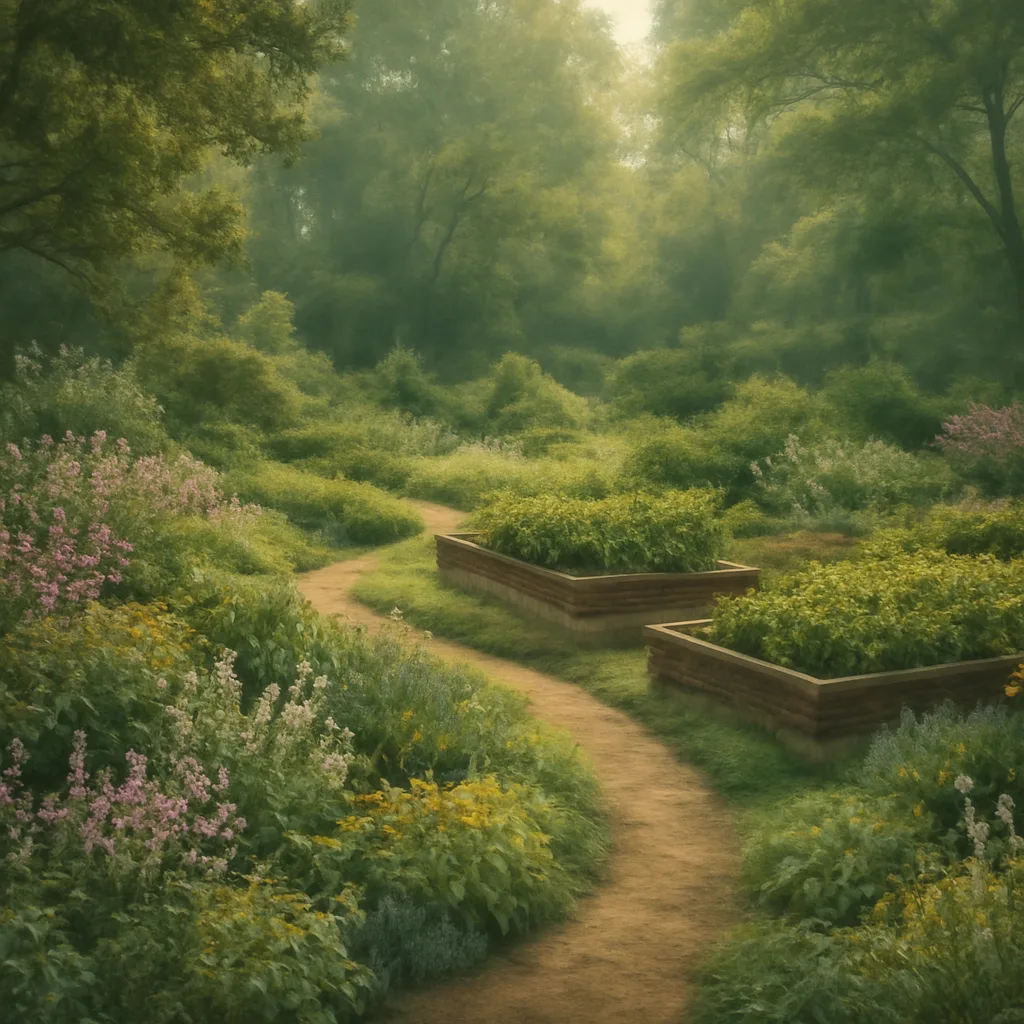
Why structure matters before planting
When a garden feels awkward, the issue is often not the plants but the layout around them. Strong structure gives the space a readable shape, helps people move through it naturally, and makes different parts of the garden feel connected.
Paths, edges, and focal points work together like a framework. Paths suggest where to walk, edges show where one area ends and another begins, and focal points draw attention to important views or pauses in the journey.
- Use structure to support the planting, not compete with it.
- Think about how the garden will be experienced from doors, windows, and sitting areas.
- Aim for a layout that feels simple enough to read at a glance.
Using paths to guide movement
A path does more than connect one point to another. It sets the pace of the garden. A straight path tends to feel direct and formal, while a curved path slows movement and can reveal the garden in stages.
The best path routes usually follow a reason: a main route from one frequently used area to another, a secondary path to a quiet corner, or a narrow access path for maintenance. If a path has no clear purpose, it can make the garden feel cluttered rather than organized.
- Keep the main route obvious and wide enough for comfortable passage.
- Use secondary paths to reduce stepping into beds.
- Avoid path turns that feel accidental or create hidden dead ends unless the effect is intentional.
Edges that finish the space
Edges are where the garden stops feeling like a collection of separate pieces and starts feeling complete. They can be soft, such as a drift of low planting, or crisp, such as a material border that cleanly separates lawn, gravel, and beds.
A clear edge helps maintain order and keeps different materials from spilling into one another. It also frames the planting so the eye knows where to focus. Without edges, beds can look unfinished, and paths can seem to drift into the planting without a clear boundary.
- Match edge style to the overall mood of the garden: soft, sharp, or somewhere between.
- Use consistent edge treatment in more than one area to create unity.
- Keep edges practical so they can be maintained without constant correction.
Focal points that give the eye a place to land
A focal point gives the layout rhythm. It may be a tree, a container, a seat, a sculpture-like plant form, or another feature that stands out because of shape, placement, or contrast. The purpose is not to fill space, but to create emphasis.
Place focal points where they reinforce the path route or mark a transition between areas. A focal point at the end of a path creates a destination. One placed at a bend can encourage someone to keep moving. Used sparingly, focal points help a garden feel composed rather than busy.
- Choose one strong feature instead of several competing ones in the same view.
- Use focal points to highlight entrances, corners, or pauses.
- Let the surrounding planting support the feature instead of overpowering it.
Bringing the elements together in one layout
The most successful garden layouts usually balance all three elements. Paths create movement, edges create definition, and focal points create emphasis. If one element is overused, the design can feel either rigid, vague, or crowded.
Start by tracing how someone will enter, move through, and exit the space. Then define where the main boundaries sit and where the important views should land. Once those structural decisions are clear, planting can be arranged to strengthen them instead of competing with them.
For general inquiries about garden layout ideas, you might prepare questions about path placement, edge materials, view lines, or how to make an existing space feel more cohesive. The most useful discussions usually begin with a simple sketch or a few notes about how the space is used.
- Set the route first, then shape the edges around it.
- Use focal points to punctuate the journey, not interrupt it.
- Check the layout from multiple viewpoints before finalizing it.
Discover
Planning a Small Garden from Scratch
A practical guide to reading light, mapping usable zones, and setting clear priorities before you plant a small garden.
Choosing Plants for Shade and Dappled Light
Practical guidance for selecting foliage, flowering plants, and understory choices that perform well in shade and dappled light.
Building Healthy Soil for Long-Term Growth
Learn how soil texture, organic matter, and simple maintenance routines work together to support steady plant performance over time.
Seasonal Care for Beds, Borders, and Containers
Practical year-round guidance for pruning, feeding, watering, and cleanup in beds, borders, and containers.